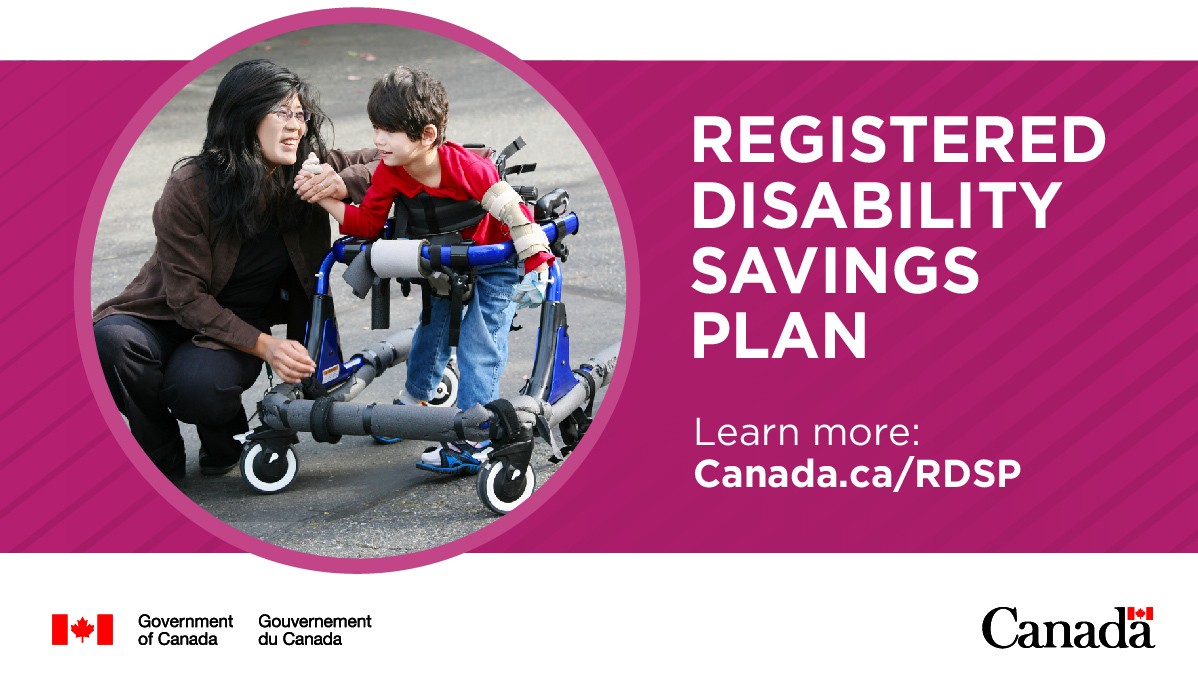
What Is an RDSP and Why Should Canadians Know About It?
The Registered Disability Savings Plan, or RDSP, is one of the most valuable savings tools available to eligible Canadians with disabilities, yet many people still do not know how powerful it can be. The RDSP is a long-term savings plan created to help individuals who qualify for the Disability Tax Credit save for the future. When an RDSP is opened, the federal government may also contribute through the Canada Disability Savings Grant and the Canada Disability Savings Bond.
At its core, the RDSP is designed to help provide greater financial security later in life. It can be opened for a beneficiary who is approved for the Disability Tax Credit, has a valid Social Insurance Number, and is a resident of Canada when the plan is opened. Contributions can generally be made until December 31 of the year the beneficiary turns 59. Grants and bonds can generally be paid until December 31 of the year the beneficiary turns 49.
One of the reasons the RDSP is so attractive is that the government may add significant amounts to the plan. The Canada Disability Savings Grant is a matching grant based on contributions made to the RDSP. The annual maximum grant is $3,500, and the lifetime maximum is $70,000. For lower and modest income families, the first $500 of annual contributions can attract a 300 percent grant, and the next $1,000 can attract a 200 percent grant. That means a $1,500 contribution can generate the full $3,500 annual grant in an eligible low income year. Higher income beneficiaries can still receive a 100 percent match on up to $1,000 of contributions per year.
The Canada Disability Savings Bond is another major benefit. This is money the government may deposit into the RDSP for low and modest income beneficiaries, even if no personal contribution is made. The annual maximum bond is $1,000, and the lifetime maximum is $20,000. For families with limited cash flow, this feature alone can make opening an RDSP worthwhile.
Another important advantage is tax deferral. Contributions to an RDSP are not tax deductible, but investment growth inside the plan is sheltered while it remains in the account. When withdrawals are made, the original contributions come out tax free, while grants, bonds, and growth are generally taxable to the beneficiary when paid out.
The RDSP is meant for long-term savings, not short-term access. In many cases, withdrawals made too early can trigger repayment of some government grants and bonds paid into the plan during the previous 10 years. Regular withdrawals must begin by December 31 of the year the beneficiary turns 60.
For many families, the biggest mistake is simply waiting too long to open the account. If someone qualifies for the Disability Tax Credit, it is worth looking at an RDSP as soon as possible. Even small contributions can unlock substantial government support over time, and in some cases government bonds may be available without any contribution at all.
The bottom line is simple. If you or a family member qualifies for the Disability Tax Credit, the RDSP is one of the best long-term planning opportunities in Canada. It can provide government assistance, tax-deferred growth, and a dedicated pool of savings for the future. For eligible families, it deserves serious attention.